


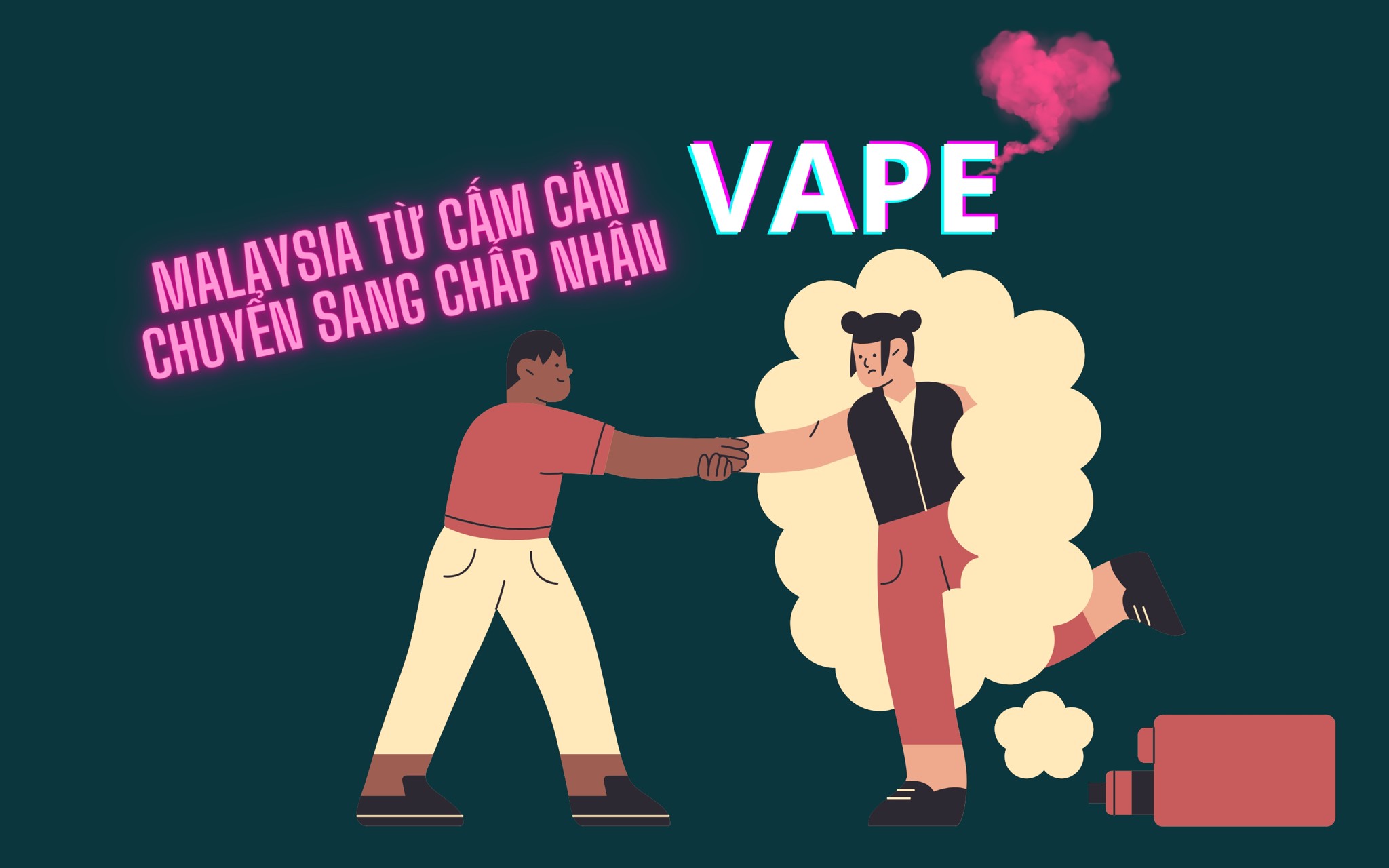
Malaysia moves from ban to acceptance of vaping
Malaysia's health minister announced last Friday that the country will decriminalize nicotine used in e-liquids from the country's Poisons Act, opening the door to a large legal vaping market.
The Ministry of Finance has introduced a tax on e-cigarette products in the 2023 budget and announced it in the country's official gazette on March 29 of the same year. The tax, which took effect on April 1, includes an excise duty of 0.4 Malaysian ringgit (RM) per milliliter of nicotine-containing liquid. That's the same tax currently applied to nicotine-free e-liquids .
The decision to remove nicotine from the Official List of Poisons was controversial, as it was seen shortly after the Poisons Committee meeting as going against the recommendation to not allow the sale of nicotine to consumers. Nicotine was previously available only by prescription and for medical use only. The Poisons Board and tobacco control activists in Malaysia want to maintain the ban on consumer nicotine products.
The government's decision was formalized in a government gazette on March 30, which describes an amendment to the Poisons Act to allow the use of nicotine to "prepare a substance for smoking through electronic cigarettes and electronic vaporizers, in liquid or gel form," according to the New Straits Times. The order was personally approved by Malaysia's Health Minister Zaliha Mustafa.
Opponents warn of public health 'crisis'
Despite the new tax and nicotine regulations, there are still no laws regulating vaping products , their promotion or marketing in the country. “A child can now use a vape without facing any legal consequences because there are no laws against it,” Malaysian Tobacco Control Council chairman M. Murallitharan told the Times.
A large number of illegal nicotine vape products have been sold alongside legally sold nicotine-free products in Malaysian vape shops. The new law effectively allows nicotine vape products to move from the black market back into vape shops, where they can be sold to adults without fear of police raids.
“This decision could mark the beginning of one of the biggest public health crises in Malaysia: a significant increase in the number of youth and children addicted to nicotine, through vaping,” Centre for Health and Social Policy executive director Galen Azrul Mohd Khalib told Malaysia Now. “We are experiencing a non-communicable disease crisis with millions of people suffering from diabetes, cancer, hypertension and obesity. This will be the next crisis.”
The revised law will come soon.
The Tobacco and Smoking Products Control Bill 2022, which was suspended in 2023, would have amended the country’s existing rules to regulate both tobacco and vaping products. The bill also includes a divisive “end of a generation” provision that would have made the sale of consumer nicotine products illegal for anyone born after 2005. Malaysia’s “end of a generation” law would have included vaping products, unlike New Zealand’s similar law passed last year.
On April 1, Health Minister Zaliha Mustafa announced that the government will propose a similar bill to regulate nicotine use as early as May, according to Malay Mail. She said the new bill will also include the controversial “end of a generation” law. It is unclear how the new regulations and final legislation will affect Malaysian states that have banned the sale of all vaping products (there are at least five).
The change is that Malaysia is starting to evolve and gradually “melt down”. The previous Malaysian government announced in late 2021 that it intended to regulate and tax e-cigarette products, proposing a detailed tax plan. That tax plan was scrapped shortly after, and the Tobacco and Smoking Products Control Bill – which would have regulated vaping – was shelved.
Malaysia is now on track to join a number of other Asian countries with legal, regulated vaping markets, notably China and the Philippines. Outright vaping bans are starting to become more common, especially in Southeast Asia.
Translated by: Hieu Dinh


